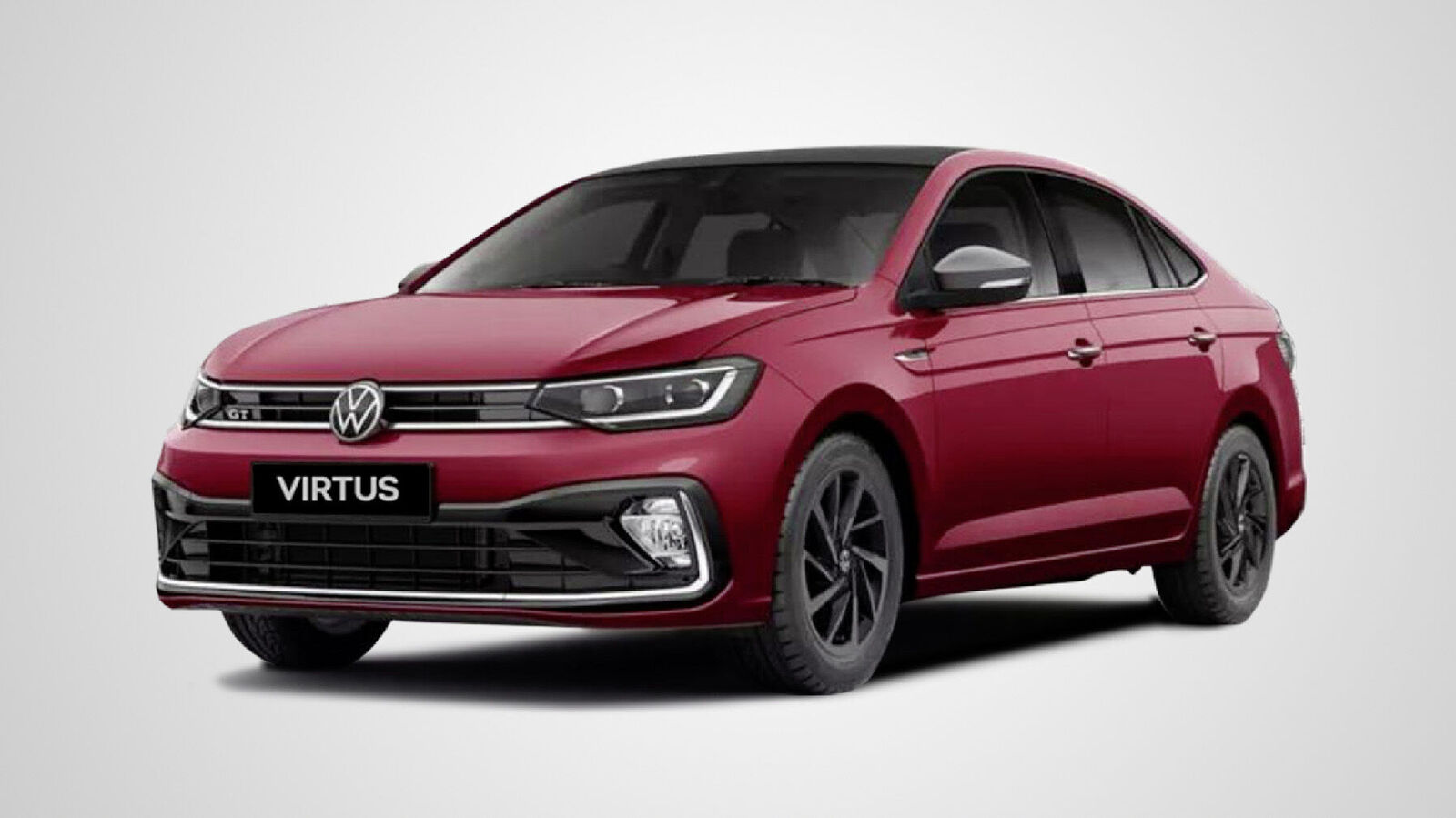
It has been almost three years since we started using the Volkswagen Virtus as our daily family car.
The Virtus was first introduced in the Indian market in 2022, as the anticipated successor to the Vento, targeting the segment of the Honda City and the Hyundai Verna. It is based on the MQB-A0-IN platform, a localised Indian version of the MQB platform, which it shares with the Taigun and its two Skoda cousins, the Slavia and the Kushaq. This is a highly localised platform compared to the Vento’s, which is quite evident once you experience the Virtus, and it has its pros and cons.
The Looks
Being from the VAG group, there are no flashy or radical bits that will blow you away at first glance. The design is sleek, with straight lines all along the car’s bodyline that show traditional German styling. The Skoda cousin looks sportier, and the Virtus is the more grown-up cousin with a no-nonsense design all the way through. It is very much inspired by the bigger German siblings like the Jetta and the Audis. Squint your eyes in traffic and you may mistake it for a Jetta. I personally got the GT boot lip spoiler fitted as an add-on accessory, which makes the rear look complete.
The Virtus gets a crazy 179 mm of ground clearance, crazy because it is the highest ground clearance offered by a sedan as of now. There are two sides to this. Yes, the car looks as if it has a weirdly lifted stance, a bit at odds with what the car wants to look like, but the sheer amount of ground clearance is very practical considering the roads we have in some areas.
The Virtus gets 16-inch wheels, which may look a bit small, but the meaty 205/55 section tyres try not to make them look that small. The Honda City, in comparison, looks more under-tyred. The wheel design is taken from the later Polo models, just sized up to 16 inches. The 1.0 models and the GT Chrome get a diamond-cut finish on the wheels, whereas the GT and GT Plus Sport get the same wheels, just blacked out. I personally prefer the contrast the diamond-cut wheels offer.
On the inside, you won’t see any of the gizmos the Koreans offer. The dash is fairly simple, with not too much going on. That could be a personal preference, as some may prefer flashier bits and the cabin of the Virtus may look a bit dull. The dash is angled towards the driver, which is more ergonomic.
The screen is not an iPad, thankfully, and is just the perfect size for all the operations needed. You get leatherette seats in a black and beige theme in the 1.0 Topline, which is what we preferred, as the beige contrast gives it a more airy feeling compared to the all-black interiors in the GT trims. The Topline also gets a decently sized sunroof, no panoramic sizes here.
The boot is quite large and can pack a serious amount of luggage. No complaints here.
Build Quality
Now here come the setbacks of the MQB-A0-IN platform. Being heavily localised, many parts are sourced locally.
The Virtus is definitely not a flimsy-feeling car. It is at the top when compared to the competitors. The panel gaps are consistent throughout, the doors have a heft to them, and overall the build is very solid.
But when someone comes from owning the old Ventos and Polos, this will feel like a downgrade in quality, and the difference is noticeable coming from the older platforms. The doors don’t feel as heavy, yet they still retain the classic VW thud, one of the things my mom and dad appreciated coming from a Honda.
The interior quality is where a lot of things have been compromised. There is little to no use of soft-touch panels. The whole interior is made up of hard-touch plastics, but of good quality. The only issue is the panel rattles, which are very much evident in most of the new MQB-A0-IN cars. Over rough patches, rattles can be heard from multiple spots. The cabin lacks the solid feel the Polo and Vento were known for.
The Drive And Handling
Here we have the Topline 1.0 TSI MT variant, which is the variant that sells the most. This 999 cc, three-cylinder turbo unit produces 115 hp and 178 Nm, and it is the entry-point drivetrain for the VAG cars in India. There is a noticeable lag under 1,800 rpm, but once you leave the turbo lag zone, the car feels lively and great to drive. Overtakes may need downshifts, but once you are in the strong midrange, the torque pulls you away with ease. Over 4,000 rpm, the engine is rather linear.
The 1.0 TSI wants you to drive it enthusiastically. It isn’t a 1.0 TSI Polo, yet it does not feel sluggish whatsoever. If you need more power, or have more highway runs, look at the 1.5 TSI options. The three-cylinder vibrations are felt at idle and are noticeable, but once you get going it is rather smooth and does not feel unrefined. Yes, there is some engine noise, but nothing that lets you down, rather a nice sporty tone. Push the car through higher revs and the engine may start sounding a bit harsh, but nothing highly dramatic.
The engine is decently efficient, managing 9 to 11 km/l in city duties, but give it an open highway and a light foot and you can squeeze out nearly 20 km/l easily. The 1.0 TSI does not get the cylinder deactivation tech that the 1.5 TSI has. Stick to 95-octane fuel for the 1.0 TSI, which is the recommended fuel.
The gearbox is quite smooth. The throws are a bit long and first gear is a bit notchy, but nothing concerning. The gear ratios are long, so at low speeds you may want to shift back into first. The clutch is smooth and the bite point is easily found, but the clutch travel may feel long, though those coming from earlier VW manuals will find this normal.
The car handles well. Ditch the factory tyres and put on a good set, and the car loves the corners, though it will oversteer mid-corner if you lift off. The steering could have done with slightly more weight, like the earlier Vento and Polo, but it is not a big trade-off. While cruising, the car is smooth, especially at the rear, which is comfortable for long trips and highway munching.
The suspension is on the stiffer side, which makes it noisier than its competitors. Drive over a rough, uneven patch and you will feel the stiffness and hear the suspension working underneath. On the other side, the stiffer suspension gives a high level of confidence at higher speeds, with a very good amount of chassis stability on offer, which makes the car more enjoyable to drive.
Features
The Virtus isn’t loaded to the brim with tech and gizmos, but it is adequately packed. The front seats are electrically powered and ventilated. You get wireless Android Auto and Apple CarPlay.
The touch-sensitive AC controls are not at all ergonomic. I wish physical buttons had been used here.
It gets a digital instrument cluster with neat readouts and a great amount of information. Type-C ports are available in the front and the back, with quick wireless charging in the front.
It gets eight speakers, unlike the SUV counterparts, which get only six. The sound quality was actually surprising. There is no audio branding or collaboration here, but the stock setup, if tuned right, sounds amazing. The higher 1.5 TSI models, and now the new 1.0 variants, get an additional rear subwoofer and an amplifier.
The Virtus comes with a VW app with a three-year subscription, which offers a decent amount of information on board, like vehicle tracking, service tracking and vehicle statistics. In my usage, though, I have found it inaccurate a lot of the time. Sometimes the car will be parked at home and the phone will throw an urgent notification saying the car is being towed. Weird.
Verdict
If you are in a city with high traffic, my suggestion is to go for the highly reliable six-speed Aisin-sourced automatic gearbox, which is seamless in traffic conditions. Get the manual only if you personally have a desire to drive a manual.
The Virtus looks clean, without any radical design elements, making it a safe choice in terms of design. The car handles well and feels solid. If you want to enjoy your daily commute, the Virtus should be your choice.
Do not take the tiny 1.0 TSI for granted, as this may be the drivetrain you prefer in an urban setting. And obviously, if you crave more power, the 1.5 TSI sits there waiting for you.
Discussion
Nerds’ Discussion
0 CommentsMembers only
Join the discussion
Sign in or create a free account to share your take on this review.